

Press about us
Guest post: Ukraine’s European challenge
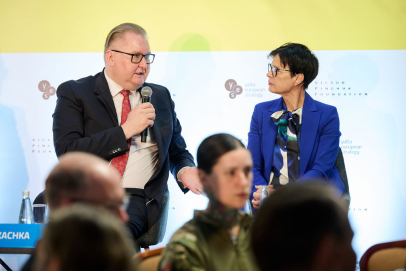
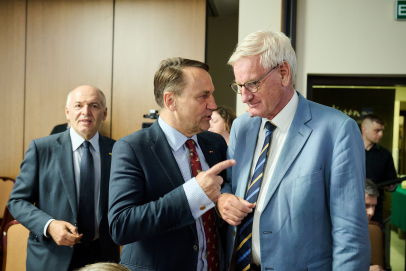
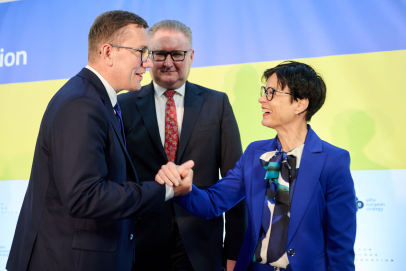
The Yalta conference in Crimea, Ukraine, left a clear feeling of a geopolitical shift in Europe. Not the one 68 years ago at this Black Sea resort but the annual Yalta European Strategy conference organised last weekend by Ukrainian philanthropist Victor Pinchuk with the participation of Tony Blair, Bill and Hillary Clinton, Karl Bildt, Stefan Fule and many other European and global leaders and opinion makers.
Movers and shakers from both the EU and Ukraine left Yalta confident that the EU’s third Eastern Partnership summit to be held in Vilnius in November will see the signature of an EU/Ukraine association agreement.
This will not open a new round of EU enlargement but it may well alter the shape of Europe’s political and economic architecture, with the integration of former Soviet republics with the EU at the level of the European Economic Area or similar.
Predictably, but still surprisingly, Russia has reacted to Europe’s approaches to its strategic neighbour by engaging in tough rhetoric, a chocolate war and threats of trade sanctions.
Almost the exact same scene was played out during the later stages of Ukraine’s efforts to receive a membership action plan from NATO. Interestingly, back then Russia declared it had no objections to Ukraine’s European choice.
However, with Ukraine’s association agreement on the horizon, Russia again showed its true colours and moved kill off any EU deal. President Vladimir Putin openly declared that he considers Ukraine and Russia as odin narod – one nation – and in Yalta his advisor Sergey Glazyev painted a grim picture of what Ukraine can expect if the association agreement is signed, raising the spectre of trade barriers and Ukrainian debt default. Prime Minister Dmitri Medvedev foresaw the end of Russia’s strategic relationship with Ukraine and Russian state TV described European aspirations for Ukraine as “euthanasia”.
Yet the Russians shot themselves in the foot. As they have increased the pressure, so Kiev has pushed back and sped up its efforts to meet the EU’s criteria.
In fact, from a rational point of view Russia’s concerns are groundless. The association agreement brings with it no prospect of EU membership, while the proposed Deep and Comprehensive Free Trade Agreement, even if implemented, offers a much lower level of integration than the Russian-led Customs Union. Ukraine’s sovereignty will remain intact.
Russia’s frantic actions stem from its own geopolitical ambitions. The former Soviet republics have not been able to make a comprehensive jump towards efficient democracy, free market economies and social well-being. With an uninterested US and a weak EU, Russia has never had a better opportunity to act.
Yet the real challenge will begin once an association agreement is signed. It will foster closer political links and open markets and is a positive step forward. But there are serious doubts about whether the agreement’s objectives will be able to withstand the many challenges that Ukraine and other countries of the EU’s Eastern Partnership initiative will have to face.
Recent opinion polls show that 42 per cent of Ukrainians support EU accession, while 31 per cent support Russia’s Customs Union. However, more than 51 per cent believed their lives would improve with greater European integration. It is a good result considering that less than 16 per cent of the adult population has travelled to the EU.
Yet the mood could change in the face of inadequate EU support and robust pro-Russian forces working to repeat their NATO success story. Unfortunately, it is likely that pro-European euphoria will evaporate as the high cost of implementation and competitive pressure from EU producers arrives. Candidate countries have benefited from generous EU assistance, access to EU funds and free movement of persons and could therefore justify painful reforms with the prospect of membership. Ukraine will not be so fortunate. Implementation of many EU directives will be costly; experts forecast, for example, that the price of implementation of the directive on large combustion plants would be as much as half of Ukraine’s annual budget. Who is going to pay? How will the EU help? The list of questions is long and, unfortunately, they still have no answers.
Yet there is an even bigger challenge. Russia’s threat of a tougher trade regime for Ukrainian goods and decreased sectorial cooperation could be very painful for Ukrainian manufacturers. Russia’s irrational reaction must be neither accepted nor ignored. While we cannot allow anyone to question Ukraine’s right to choose its own future, we also need to find a way to accommodate Russia in the European reunification project. Otherwise, August’s chocolate war will not be the last such episode.
Vasyl Filipchuk is an advisor to the board of the International Centre for Policy Studies and a former political director at the Ukrainian foreign ministry. Amanda Paul is a policy analyst at the European Policy Centre.
 (1) (1).png)
.png)
.png)