

News
25.01.2025
Victor Pinchuk Foundation hosts discussion “The Stakes of the War: What Can History Tell Us?” on the occasion of WEF 2025
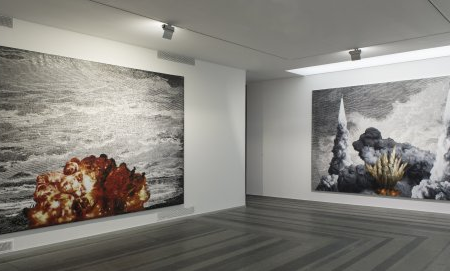
Victor Pinchuk Foundation hosted the discussion “The Stakes of the War: What Can History Tell Us?” during WEF in Davos (Switzerland). The event was held as a part of the project ‘YOUR COUNTRY FIRST – WIN WITH US’ organized by Victor Pinchuk Foundation and PinchukArtCentre in cooperation with the Office of the President of Ukraine. The project, which combines an ongoing discussion program and an exhibition, is an immersive intellectual and visual experience, and a space for dialogue and action.
Timothy Snyder, Richard C. Levin Professor of History and Global Affairs, Yale University, Yaroslav Hrytsak, Professor, Ukrainian Catholic University, Gideon Rachman, Chief Foreign Affairs Commentator, Financial Times and Walter Mead, Global View Columnist, Wall Street Journal, shared their views on what we can learn from history about this war.
Nataliia Gumenyuk, Co-founder, Public Interest Journalism Lab and The Reckoning project, moderated the discussion.
Walter Mead, Global View Columnist, Wall Street Journal, said: “The Ukrainian people are the best example of a people who can remain resilient despite the atrocities thrown at them. They have an incredibly difficult history. This very much created Ukraine, not broke Ukraine.
“Generally, in the west, they want to see themselves very much as Churchill, but they act as Chamberlain. They are inhibited by a fear of Russia, and hope that Ukraine itself will sort it out sooner or later.”
Gideon Rachman, Chief Foreign Affairs Commentator, Financial Times: “I will defend Chamberlain. In recent history, we have seen that many leaders act like Churchill and go to war, but that ultimately is the wrong decision. Having said that, I believe Russia’s invasion is much more similar to Hitler’s invasion of Europe than other recent wars.”
Timothy Snyder, Richard C. Levin Professor of History and Global Affairs, Yale University, described three trends which he believes suggest that Ukraine will win the war: “Firstly, Russia does wars. It doesn’t always win, despite the myths. Just look at the Crimean War, the First World War and Russo-Japanese War. Secondly, post-сolonial countries often win. If you look at the UN, it is made up of roughly 200 members, because countries that used to be imperial powers lost their imperial wars. Thirdly, history shows that states that defend their own territories often win. We shouldn’t forget that.”
Yaroslav Hrytsak, Professor, Ukrainian Catholic University: “For peace, we need to recognize clearly the integrity of the borders. We also need Russian intellectuals or public figures to say publicly that they are sorry, that they will not commit the crimes again. Miracles do happen – we can look at today’s relations with Poland and Ukraine which used to be tense. Having said that, I am rather sceptical that this miracle can happen. The best thing that could ever happen to Russia is that it loses the war so that it can start reconstruction.”
Nataliia Gumenyuk, Co-founder, Public Interest Journalism Lab and The Reckoning project, concluded the session with a word of hope: “We survived when we didn’t have a country, and we have it now. It's our best chance and we must use it – we need to prevail.”
Photos are available here
Video is available here