

Press-releases
International Conference "Ukraine After the Elections"
Berlin, 25.04.2006
Ukraine After the Elections and a Future Coalition Discussed in Berlin
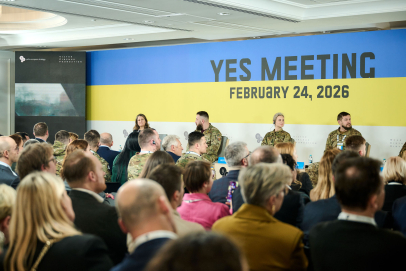
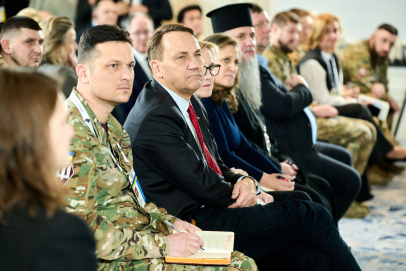
Over 200 home and foreign policy experts, journalists, businessmen, academia and simply people who care about Ukraines future gathered in Berlin on April 25, 2006, for an international conference Ukraine After the Elections, organized by the international non-governmental organization Yalta European Strategy in partnership with the German Council on Foreign Relations. The organizers sought to contribute to better understanding in Germany and in the European Union as a whole of the new political situation in Ukraine and perspectives of leading political forces on common challenges and issues of European integration of Ukraine. Representatives of Ukraines leading political forces Ksenia Lyapina (Nasha Ukraina) and Dmytro Vydrin (Yulia Tymoshenko Block, BYUT) told the participants about the process of negotiations on building a future coalition, principles and approaches of the political forces, and problems that emerge in the negotiation process. The German participants were interested primarily in prospects of building a coalition that would unite the political forces that had won the parliamentary elections. The coalition-building process is bound to be lasting and difficult, says Ksenia Lyapina, as much of what Ukraine is going through is its first-time experience. The problem areas of the coalition-building negotiations include different views of the potential participants of a democratic coalition on prospects of Ukraines accession to NATO, speed and objectives of integrations with the EU, joining the WTO, and privatization. We must think of the most important: ensuring that actions of a new government are predictable, understandable and transparent, Mrs. Lyapina believes. The problem, though, is that Ukraine, while formally already a parliamentary-presidential republic, psychologically has not changed yet, says Dmytro Vydrin. In his view, a coalition needs a shared goal and a leading personality who would guarantee its achievement. However, according to Mrs. Lyapina, agreement on principles and programme of action must be achieved first of all, and decisions on personalities can be made afterwards.
A businessman and philanthropist Victor Pinchuk believes that the best option for Ukraine would be a broad coalition that would include, alongside with Nasha Ukraina and BYUT, the Party of Regions and the Socialist Party. Germany gives us an example: last year political opponents united in a coalition after the elections for the German people, he says. As far as Ukraine is concerned, the key problem for all Ukrainians and the key obstacle on Ukraines way to the EU is Ukraines unreformed judiciary system and the lack of rule of law, Mr. Pinchuk believes.
Germany will assume the presidency of the EU on January 1, 2007. Ukraine should have an important place among Germanys priorities and actions during its six-months Presidency. Some time ago Germany was active and successful in promoting Polands accession to the EU. Today the degree to which Germany will be interested in widening and deepening a dialogue with Ukraine will largely affect not only the quality of that dialogue but also Ukraines further movement towards the EU.
Speakers at the conference included YES Chairman of the Board and Member of Parliament of the UK Stephen Bayers, and YES Board Members - Mario David, member of Parliament (Portugal) and vice president of the European Peoples Party, and Alexander Rahr, a leading German political analyst and director of Koerber Centre, German Council on Foreign Relations.
YES (www.yes-ukraine.org) is an independent international network uniting influential political leaders, businessmen, representatives of intellectual elite, researchers and journalists in Ukraine and abroad.
The mission of YES is to contribute to bringing Ukraine closer to the European Union. YES activity aims at supporting Ukraines integration into the EU institutions. YES offers specific solutions and contributes to their adoption, organizes lectures, public debates and working groups in Ukraine and the EU.
YES Board Members are Stephen Bayers (Chairman, Member of Parliament, UK), Victor Pinchuk (businessman and Member of Parliament, Ukraine), Mario David (Member of Parliament, Portugal), Alexander Rahr (Director, Koerber Centre, German Council on Foreign Policy), Jean-Pierre Saltiel (President, Rothschild Conseil International (1998-2004), France), Marek Siwiec (Member of European Parliament, Poland), Stephan Fuchs (Executive Director, French branch of Euro RSCG Worldwide).