

Press about us
Philanthrocapitalism: Yes We Can
What cause, what movement brings together Tony Blair and Jet Li, Bill Clinton and Bill Gates, Muhammad Yunus and Sir Richard Branson? In a word (albeit a hard-to-pronounce word), it is philanthrocapitalism.
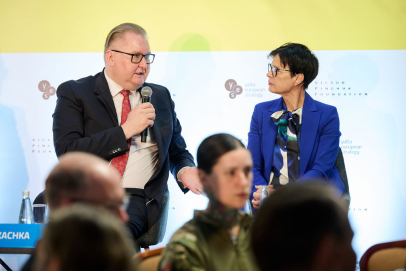
Philanthrocapitalism is about combining the head and the heart, by bringing a businesslike approach to solving society's problems, which now seem more daunting than at any time in a generation. The great and good gathered these past few days in Davos for the World Economic Forum were in danger of talking themselves (and the rest of us) into a depression. The panel itself, hosted by the Victor Pinchuk Foundation, was gloomily entitled "From Philanthrocapitalism to Philanthrocrisis?" Yet the six famous global leaders spoke optimistically about how philanthrocapitalism can lead the world out of its current mess. Their enthusiasm could not have been more timely.
Their message had three main components.
First, leaders need to demonstrate their personal commitment to give back. Gates is leading by example, increasing the annual giving of his foundation by over 10% this year, to a record $3.8 billion, even though the foundation's assets have fallen by 20% in the past year. He called on other wealthy people to give more, especially the large number who now give nothing at all. Whilst some people who have given a lot in recent years have been so badly hit by the financial crisis that they have to scale back, if the non-givers and small-givers dig a bit deeper, their new money can more than fill the giving gap, he said.
Jet Li, the Chinese movie star, said much the same thing -- highlighting how the philanthrocapitalism movement that has been most vibrant in America is now spreading throughout the world. Jet Li's organization, One, has already signed up 1 million Chinese to give money and time to good causes. He told me that he turned down two $20 million movie deals in 2008 because he wanted to concentrate on his giving -- a role model for leaders worthy of the star of Hero. What a tragedy it would be if growing protectionism and China-bashing increases, and alienates the world, just as American ideas are catching on in places that used to be hostile.
Second, philanthrocapitalism is about innovation and risk taking in the name of social progress. Both Clinton and Blair pointed out that government tends to be hopeless at innovation, unlike the private sector, both for-profit and non-profit. If there is to be change we can believe in, government must embrace these changemakers in new partnerships, especially social entrepreneurs. Yunus is the poster-child of social entrepreneurship, having won the Nobel peace prize for his role in developing microfinance (financial services for the poor).
That said, much of the non-profit sector performs far below its potential. The economic crisis may be the catalyst that sorts out the best non-profits from the also-rans, leading to a sharp increase in the overall effectiveness of the sector. At another well-attended event at Davos, about "Philanthrocapitalism in Action", serial social entrepreneur Nancy Lublin described one innovative way to improve the efficiency of the non-profit sector by describing her recent "initial public offering" of shares in the non-profit she runs, DoSomething.org.
Third, philanthrocapitalism is about doing well by doing good. Both Yunus and Branson enthused about how businesses should embrace social causes as a profit-making strategy, because the money earned by harnessing the profit motive can help achieve change faster, and more sustainably than old-fashioned charity alone.
Encouragingly, many of the business leaders in Davos seemed to be getting the message. Nike, for example, which has learned the hard way that business needs to be on the side of good, announced that it will freely share all the intellectual property it has developed through its environmental strategy to a new "green exchange". In a closing plenary discussion on what business can do to reduce the risk of a social backlash, there was general agreement that companies urgently needed to adopt "values-based leadership".
The trouble is, although business thinking has a huge amount to offer the world at this time of crisis, thanks to the crisis its credibility has never been lower. A survey by Edelman, the public relations firm, found that of 4,500 upper income, highly educated people in 20 countries, nearly two-thirds (62 per cent) say they trust corporations less today than they did a year ago. In the US, the survey recorded the most dramatic plunge: only 38 per cent say they trust business to do what is right (a 20 per cent drop from last year) and just 17 per cent say they trust the information they get from a company's CEO.
That is why I made a modest proposal at Davos: that the chief executives of the world's 500 biggest firms demonstrate their contrition for their role in the crisis, and their commitment to help society recover, by each giving $2m (or, better still, one year's base salary) to a new fund to support social entrepreneurs. This sort of billion-dollar collective sacrificial leadership could transform public attitudes towards business and business-thinking, and get the age of philanthrocapitalism off to a great start.
Old-fashioned capitalism is dead. Long live philanthrocapitalism?
Matthew Bishop is New York Bureau Chief of The Economist and co-author with Michael Green of Philanthrocapitalism: How the Rich Can Save the World . They blog regularly about philanthrocapitalism at www.philanthrocapitalism.net.