

Press about us
The odd couple trying to set Ukraine on road to Europe
Tony Halpin in Donetsk, Ukraine
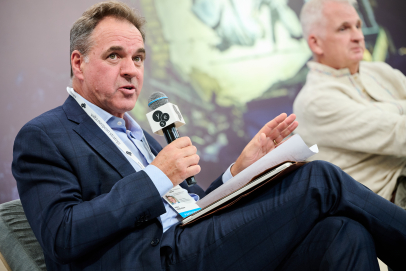
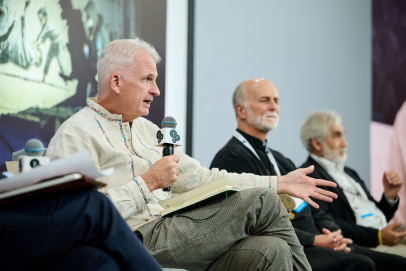
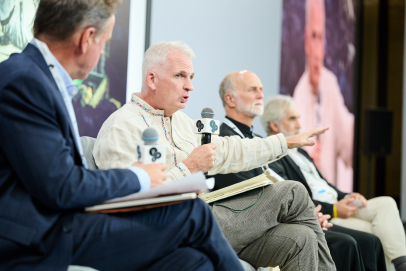
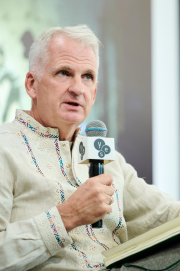
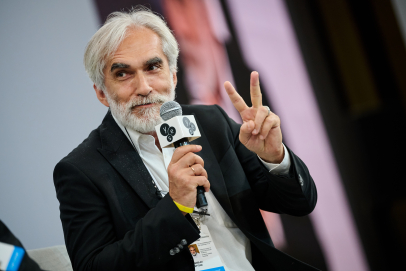
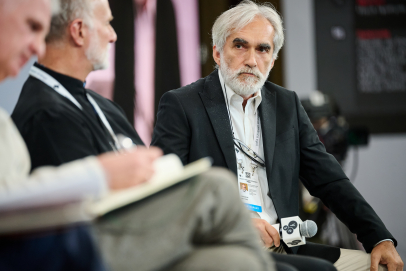
The billionaire oligarch and the former President of Poland make an unlikely campaign team to persuade the people of Ukraine that their future lies with Europe and not Russia.Aleksander Kwasniewski, the former President of Poland, had a simple message to sell as he toured Ukraine this week: that the road to prosperity and freedom lies in completing the journey from Soviet Union to European Union.
Accompanied by Viktor Pinchuk, the second-richest man in Ukraine, Mr Kwasniewski followed a route from Lviv, in the west, to Donetsk, in the east, which exposed the fault lines running through this country of 50 million people. While the West spies a chance to rejoin its European kin, the pro-Russian East holds firmly to family ties with Moscow.
The European future seemed easy to imagine in Lviv, once part of the Austro-Hungarian Empire, where Mr Kwasniewski addressed civic leaders in a palace built for a Polish prince. Lviv was part of Poland until the Soviet Union invaded in 1939, and its elegant boulevards and historic squares ooze Central European charm.
It was a different story in Donetsk, where the Kwasniewski roadshow was greeted by protesters with banners declaring "Nato is worse than the Gestapo". Most people here make no distinction between the Nato military alliance and the EU.
Mr Kwasniewski, President for a decade until 2005, spoke Polish in Lviv, to the evident pleasure of his audience as he argued for Ukraine to emulate his success in getting Poland into the EU and Nato.
Support was a given in Lviv, where people were far more exercised about the hostility of their fellow Ukrainians in Donetsk and Dnipropetrovsk, the second stop on Mr Kwasniewski's tour. He was reduced to telling them that he would make his message more palatable by delivering it in Russian.
Dnipropetrovsk, Mr Pinchuk's home city, used to make the SS20 nuclear missiles that the Soviet Union pointed towards Europe in the 1980s. The 500-strong crowd at the National University listened with sceptical interest, doubtful that the EU even wants Ukraine. In Donetsk, the heartland of Viktor Yanukovych, the pro-Russian Ukrainian Prime Minister, Mr Kwasniewski was heckled repeatedly by pro-Communist sympathisers.
Donetsk was the focus of opposition to the Orange Revolution that swept the pro-European Viktor Yuschenko to power in 2004. Mr Kwasniewski was a prominent opponent against Mr Yanukovych, who is now taking his revenge by draining Mr Yuschenko's authority as President.
The Polish statesman believes that the EU has a moral duty to admit Ukraine as part of unfinished business from the end of the Cold War. He admitted, though: "Western Europe regards Ukraine as a problem first of all in the context of its relationship with Russia. We in Poland think that Ukraine must be integrated into the EU, and not Russia. It doesn't mean any conflict - we just have a different view of the future."
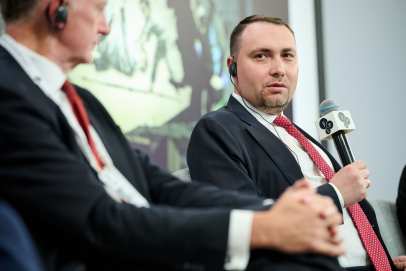
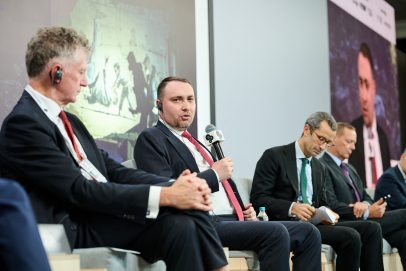
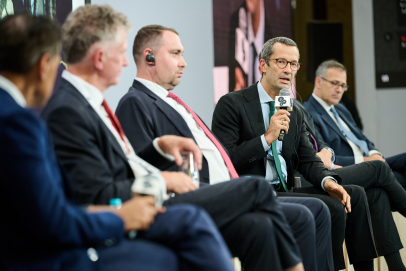
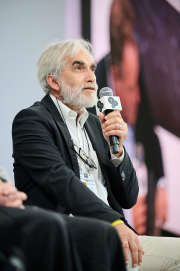
Mr Pinchuk, 46, is worth an estimated £1.5 billion and is the son-in-law of Leonid Kuchma, the former Ukrainian President. He played a key role behind the scenes in mediating a peaceful outcome to the Orange Revolution. He established the Yalta European Strategy (YES) organisation to mobilise support for EU entry by 2020. Mr Kwasnieswki's visit is the first of a series of public forums to involve prominent figures that YES plans to hold in Ukraine every six months. It hopes that Tony Blair will be next - Stephen Byers, the Blair-ite former Cabinet minister, is chairman of the board of YES.
Mr Pinchuk told The Times: "The goal of membership of the European Union is a driving force to implement critical reforms in market economics, democracy and rule of law in Ukraine. Then we will see."
If Ukraine is encouraged to apply, it would be the largest new member since Britain, in 1973, provided that Turkey does not get there first. For now, the EU is offering only a free trade agreement with Ukraine.
Mr Kwasniewski said: "Europe needs Ukraine and Ukraine needs Europe. That's my historic project and I would like to achieve it."